Place Vintimille
Maigret and the Dead GirlPlace Vintimille is both the scene where the investigation begins and the place selected to abandon the murdered girl’s body. Its apparent quiet, just beyond the bustle of Place Blanche, made it a convenient destination for those trying to distance the body from the bar where the killing had occurred.
Setting and discovery
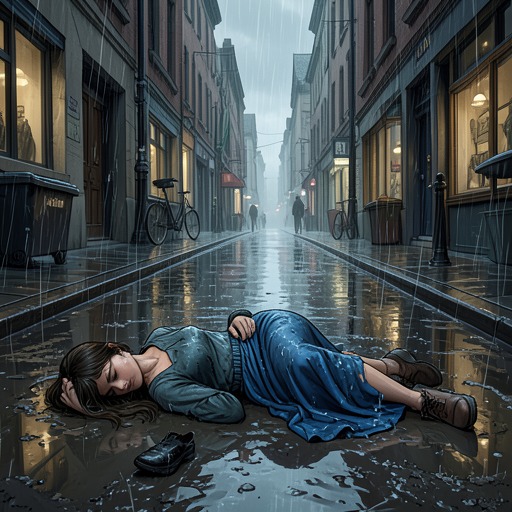
The discovery reaches Maigret through a late-night call: a girl’s body has been found at Place Vintimille, and the message has come through only three minutes earlier. He leaves with Janvier to see the scene. The wet streets are nearly empty; at the square, described as a small island of calm just off Place Blanche, a police car stands beside the iron railing around a tiny garden. Four or five men gather near a light-colored form stretched on the ground. The setting’s stillness contrasts with the urgent arrival of the police and marks the square as the first visible point in the inquiry.
Examination and forensic traces
The scene was documented before the doctor examined the body. Once it had been turned, the girl’s face appeared younger than it had at first; the medical examination established that she had died from a fracture of the skull. Dr. Paul could not identify the object used, but concluded that she had been struck several times. Dark wool fibers beneath her fingernails suggested that she had grasped someone’s clothing during a struggle, and he sent the material to the laboratory for analysis. These findings made Place Vintimille the starting point of a physical inquiry, while leaving open where the assault itself had taken place and who had been involved.
Subsequent examination of the black dress sent for analysis extended that inquiry beyond the square. The garment had not been taken to a cleaner, though spots had repeatedly been treated with cleaning fluid and the dress regularly brushed. Dust remained caught in its fibers; analysis of the dust and of stains the fluid had not removed revealed green paint. The examination also found a few grains of sand, identified as the kind found on the Normandy coast rather than river or Mediterranean sand. These traces did not by themselves explain the body’s presence at Place Vintimille, but they gave investigators material clues pointing beyond its quiet, central setting.
The choice of the square
The body’s presence at Place Vintimille marked a decision about where to leave it, not proof that the assault had happened there. In a later explanation, those responsible said they could not leave it near the bar; because of the girl’s clothes, Montmartre seemed a more plausible area, and they chose the first deserted place they came to there. The choice turned the square’s quiet, out-of-the-way character into cover, while also giving investigators a reason to look beyond the location where the body was found.
That plan was vulnerable to a small physical complication: the thin chain of the silver bag had become twisted around the girl’s wrist. The account says Bianchi would otherwise have taken the bag and the car would have driven away at speed. The chain thus altered the circumstances of the disposal, making the body’s final location the result not only of a deliberate choice of district but also of an accident involving an ordinary possession.
Public response
As the investigation continued, a Technical Branch car arrived, and a drunken man who had joined the group protested that the police were not helping the young woman. An officer was trying to move him away. The brief interruption sets the formal work of documenting the scene alongside an onlooker’s immediate, mistaken impression of what the police were doing.